
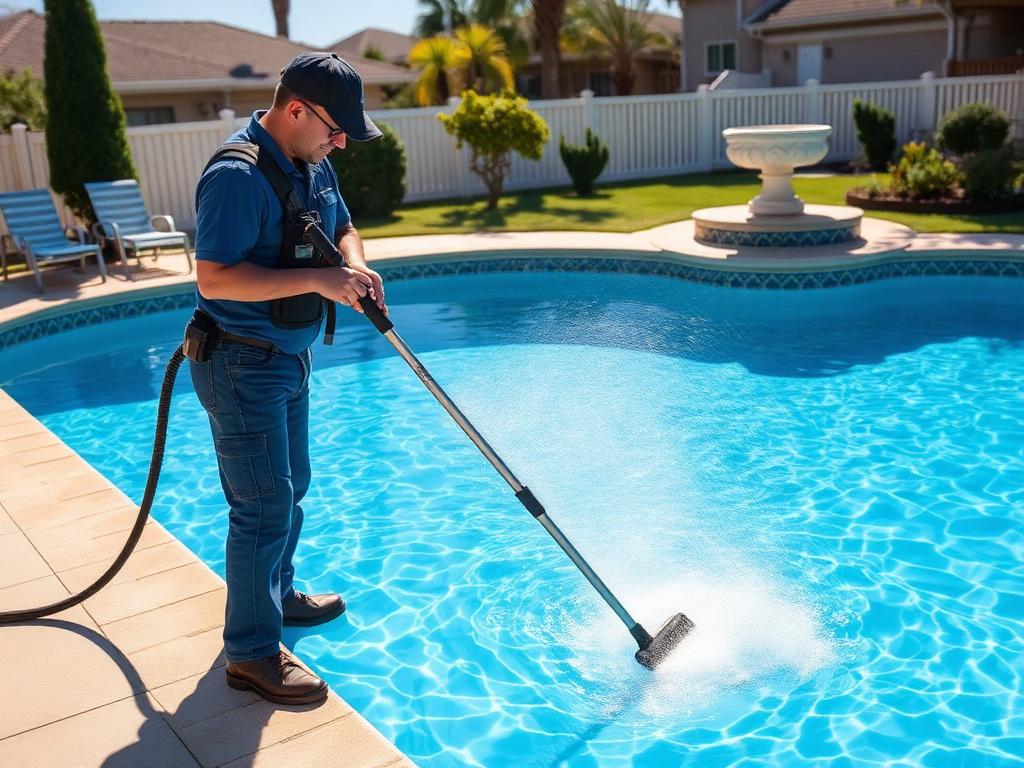
Cleaning a swimming pool in Bergen County is not the same job as cleaning one in Florida or Arizona. Our season is short and intense, our tree canopy is heavy, and our weather swings from a 95-degree humid stretch in July to a 50-degree rainy week in September. A pool in Englewood, Tenafly, Fort Lee, Teaneck or Ridgewood is fighting oak pollen in spring, thunderstorm runoff in summer, and a relentless leaf drop in fall — often all in the same calendar year that it sat under a winter cover for five months.
After 30 years of servicing pools and spas across Northern New Jersey, we have learned that clean water is far less about scrubbing and far more about rhythm. Owners who run a consistent weekly routine spend maybe 20 to 30 minutes a week on their pool. Owners who let it slide spend a weekend fighting algae, burn through chemicals, and sometimes replace equipment that failed because it was choked with debris.
This guide walks through the full picture: the tools that actually matter, the weekly routine, the chemistry targets we test to, how to handle the specific problems Bergen County throws at pools, and a month-by-month schedule you can follow from opening to closing.
Why Bergen County pools get dirty faster than most
Northern New Jersey backyards are shaded and green, which is lovely to look at and hard on pool water. Three local factors drive most of the cleaning work we see.
- Tree cover: Oak, maple and pine surround most properties here. Tannins from leaves stain plaster and vinyl, and decaying organics eat chlorine before it can sanitize.
- Spring pollen: Late April through early June, a yellow-green film settles on the surface daily. Pollen is organic, so it consumes sanitizer and clogs filters quickly.
- Summer storms: Heavy rain dilutes chlorine, drops pH, and washes lawn fertilizer (phosphates and nitrates) straight into the pool — which is basically fertilizer for algae.
- Heat and bather load: A hot, humid Bergen County July with kids in the pool every day burns chlorine two to three times faster than a mild June week.
- Short season: Most local pools open in May and close in late September or early October, so there is little margin to recover from a neglected stretch.
The equipment you actually need
You do not need a garage full of gear. You need a handful of good tools that will last more than one season. Cheap poles and brittle brushes fail in the middle of the job and cost more over time.
- Telescopic pole, 8 to 16 feet, with a solid locking collar — this is the backbone of every other tool.
- Leaf skimmer net (flat) for the surface and a deep leaf rake for the floor after a storm.
- Wall and floor brush: nylon bristles for vinyl and fiberglass, stainless-blend bristles for gunite and plaster only.
- Manual vacuum head and hose, even if you own a robot — you will need it for heavy debris and fine silt.
- A reliable test kit: a DPD drop kit or a digital tester. Test strips are fine for a quick check but drift as they age.
- Pumice stone or tile brush for the waterline, plus a dedicated tile and vinyl cleaner.
- A robotic or pressure-side cleaner if you have a large yard or heavy leaf fall — it pays for itself in hours saved.
The weekly cleaning routine that keeps water clear
Do these five things every week and you will rarely have a problem. Split them up if you like — skim daily, brush and vacuum on the weekend — but do not skip a full week during peak season.
- 1. Skim the surface. Two minutes with a net removes leaves, pollen film and bugs before they sink and stain. Debris on the bottom is ten times harder to remove than debris on top.
- 2. Empty the baskets. Clear the skimmer basket and the pump strainer basket. A clogged basket starves the pump, reduces circulation, and can burn out a motor seal.
- 3. Brush the walls, steps and corners. Algae starts where water moves least: behind ladders, in corners, on the shady side, and along the waterline. Brushing lifts it into the water so the sanitizer can kill it.
- 4. Vacuum the floor. Manual vacuum on 'waste' for heavy silt (watch your water level) or on 'filter' for light debris. If you run a robot, still spot-vacuum the deep end.
- 5. Test and balance. Check chlorine and pH at minimum, twice a week in July and August. Adjust in small doses and retest the next day rather than dumping everything at once.
Water chemistry: the numbers we test to
Clean water is chemistry first, elbow grease second. If your chemistry is off, you can brush all day and the pool will still look dull. These are the ranges we target on Bergen County pools.
- Free chlorine: 1 to 3 ppm (aim for the top of the range in peak heat and after heavy use).
- pH: 7.4 to 7.6. Above 7.8 chlorine loses most of its punch and you get scale and cloudiness.
- Total alkalinity: 80 to 120 ppm — this is your pH buffer. Fix alkalinity before you chase pH.
- Calcium hardness: 200 to 400 ppm for plaster and gunite; 175 to 275 ppm for vinyl liners.
- Cyanuric acid (stabilizer): 30 to 50 ppm. Too little and the sun destroys your chlorine; too much and the chlorine goes lazy.
- Phosphates: under 200 ppb. Lawn runoff is the usual culprit here and it is a major algae driver in our area.
How to shock a pool the right way
Shocking (superchlorination) burns off the combined chloramines that make water smell like 'chlorine' and look hazy. That smell is not too much chlorine — it is spent chlorine.
Shock after a pool party, after a heavy rain, after a stretch above 90 degrees, and any time free chlorine reads well below combined chlorine. Do it at dusk so the sun does not destroy the shock before it works, pre-dissolve granular shock in a bucket of water for vinyl pools, run the pump overnight, and wait until free chlorine is back under 5 ppm before swimming.
Fixing the four problems we get called about most
- Green water (algae bloom): Brush every surface, balance pH to 7.4, shock hard, run the filter 24 hours, and clean or backwash the filter the next day. Repeat if the water turns cloudy blue-gray — that is dead algae, and it means it is working.
- Cloudy water: Usually a filter or chemistry issue, not dirt. Check filter pressure, clean cartridges, verify pH and alkalinity, and consider a clarifier or flocculant for very fine particles.
- Yellow or mustard algae: Common on the shady side of Bergen County yards. It brushes off easily but comes back. It requires elevated chlorine over several days plus cleaning every pole, brush and float that touched the water.
- Waterline ring and stains: Tannin stains from leaves, plus body oils and sunscreen, form a grease band. Clean it weekly with a tile brush and an enzyme product; letting it bake on can permanently mark plaster.
Filter care most owners forget
Your filter is the workhorse. It does more actual cleaning than any tool you own, and it is the most commonly neglected piece of equipment we see on service calls.
- Note the clean pressure reading. When the gauge climbs 8 to 10 psi above that baseline, it is time to clean or backwash.
- Sand filters: backwash until the sight glass runs clear, then rinse. Replace sand roughly every five to seven years.
- Cartridge filters: hose the pleats out monthly during the season and deep-soak them in a filter cleaner at least once a year.
- DE filters: backwash and recharge with the correct amount of DE; break down and clean the grids at least once per season.
- Circulation matters: run the pump long enough to turn the water over at least once a day — in a Bergen County July that usually means 8 to 12 hours, more on a variable-speed pump at low speed.
A Bergen County cleaning calendar
- April–May (opening): Cover cleaned and removed, water topped off, equipment started, water professionally tested, and a heavy first shock. Expect a week of extra vacuuming as winter debris settles out.
- Late May–June (pollen season): Skim daily, clean the filter more often than feels necessary, and keep chlorine at the top of the range.
- July–August (peak): Test twice weekly, shock after parties and storms, brush weekly, and watch the water level after heavy vacuuming.
- September (transition): Leaves start early here. Keep skimming and do not let chlorine slide just because swimming has slowed.
- October (closing): Deep clean, balance the water for winter, lower the level below the tile line, blow out and plug the lines, and secure the safety cover.
- November–March (winter service): Clear leaves off the cover, keep water off the top of it, and check the level and chemistry mid-winter to prevent expensive freeze and stain damage.
When to call a professional
There is no prize for fighting a pool by yourself. Call us when green water does not clear after two proper shock treatments, when filter pressure will not come down after cleaning, when you see a persistent drop in water level that may be a leak, when the heater short-cycles or will not fire, or when you simply want the season back.
Island Pool & Spa has serviced the pools and spas of Bergen County for 30 years from our store at 80 Lafayette Place in Englewood. We have five Certified Maintenance Specialists on staff, we test your water free in the store, and we handle openings, weekly maintenance, repairs, closings and mid-winter service. Bring in a water sample or call 201-567-2056 and we will tell you exactly what your pool needs — and what it does not.
Want the season back?
Weekly maintenance, one-time cleanups, openings and closings across Bergen County — handled by our Certified Maintenance Specialists.
Frequently asked questions
How often should I clean my pool in New Jersey?+
Skim the surface and empty baskets a few times a week, and do a full clean — brush, vacuum, test and balance — once a week. During pollen season in late spring and heavy leaf fall in September and October, plan on skimming daily.
How long should I run my pool pump each day in the summer?+
Long enough to turn the water over at least once, which for most Bergen County residential pools is 8 to 12 hours a day in July and August. Variable-speed pumps can run longer at low speed for better filtration and lower electric cost.
Why does my pool turn green after it rains?+
Rain dilutes your chlorine, lowers pH, and washes lawn fertilizer, phosphates and organic debris into the water. That combination lets algae take hold within a day or two. Test and shock after any heavy storm rather than waiting for the water to change color.
Do I still need to vacuum if I have a robotic cleaner?+
Usually yes, but less. Robots handle everyday silt and light debris well, but they struggle with heavy leaf loads, deep-end corners and fine dust after a storm. Keep a manual vacuum for those jobs.
What chlorine level should a pool be at?+
Free chlorine between 1 and 3 ppm with pH between 7.4 and 7.6. If pH climbs above 7.8, chlorine becomes far less effective, which is why cloudy water often clears once pH is corrected.
Should I clean my pool before closing it for the winter?+
Absolutely. Anything left on the floor in October decays under the cover all winter and stains the surface. A thorough vacuum, brush, waterline cleaning and balanced water before closing makes spring opening dramatically easier.
Can I get my pool water tested for free in Englewood?+
Yes. Bring a sample to our retail store at 80 Lafayette Place in Englewood and we will test it and walk you through exactly what to add. It takes a few minutes and it is free.
How much does professional pool cleaning cost in Bergen County?+
It depends on pool size, tree cover, equipment and how often you want service. Weekly maintenance plans, one-time cleanups and seasonal packages are all available — call 201-567-2056 and we will quote your pool specifically.